
"coffee with plants"
50000 article(s) found

Uganda coffee beans processing Uganda sun coffee flavor characteristics processing plant introduction
Professional coffee knowledge exchange More coffee bean information Please pay attention to coffee workshop (Weixin Official Accounts cafe_style) Qianjie-Uganda Mary sweet processing plant Special sun micro-batch Uganda Mary sweet processing plant Special sun micro-batch Uganda KAWACOM MALIBA NATURAL DRIED COFFEE Origin: Mt.Rwensori Region, Kasese, Uganda Bean seed: SL14S

Yunnan coffee farm, Yunnan coffee bean planting
Following Cafe (official Wechat account vdailycom) found that the western and southern parts of Yunnan Province are located between 15 N and the Tropic of Cancer. Most areas are 1000-2000 meters above sea level. The topography is mainly mountainous and sloping, with large undulation, fertile soil, sufficient sunshine, rich rainfall and great temperature difference between day and night. These unique natural conditions form clouds.
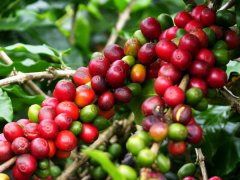
Which countries and regions can grow coffee? What conditions do you need to grow coffee?
Since coffee trees are tropical plants, they need to be planted in warm places. The main planting area is distributed between latitude 25 south and latitude 25 north with the equator as the center, so this area is also called the coffee belt. However, even in the coffee belt, Arabica and Robeska do not grow in exactly the same area, but grow up in an environment that is more suitable for their own growth.

Brief introduction of Coffee planting History and planting Technology
In China, according to historical records, coffee trees were planted in Taiwan for the first time in 1884, and coffee cultivation in mainland China began in Yunnan. In 1902, a French missionary named Tian introduced seeds from Yingong, Binchuan County, Yunnan Province. it was successfully planted in a place called Zhu Kula, a tributary of the Jinsha River. The commercial cultivation of coffee in Yunnan began in 1985.

What kind of fine coffee is the coffee tree planted in shade?
First of all, there are some reasons why shade planting has become an advantage. When coffee is planted in the shade of other vegetation, biodiversity provides favorable conditions for its growth. Native plants that provide shade for coffee range from forest plants such as cedar to fruit trees such as banana, orange, lemon, avocado and litchi.

Description of Flavor of Yunnan small Coffee Huaguoshan Coffee A brief introduction to the planting situation of the Manor
The history of coffee cultivation in Yunnan can be traced back to 1892. A French missionary brought coffee to Yunnan from abroad and successfully planted it in a valley in Binchuan County, Yunnan Province. The coffee plants of this batch of coffee seeds are still blooming and bearing fruit in Binchuan County. Yunnan coffee was planted on a large scale in the mid-1950s, with a planting scale of 4000 hectares at one time. To

Brief introduction of Coffee planting History and planting Technology
In China, according to historical records, coffee trees were planted in Taiwan for the first time in 1884, and coffee cultivation in mainland China began in Yunnan. In 1902, a French missionary named Tian introduced seeds from Yingong, Binchuan County, Yunnan Province. it was successfully planted in a place called Zhu Kula, a tributary of the Jinsha River. The commercial cultivation of coffee in Yunnan began in 1985.

How do coffee trees grow? do you want to know if you can grow coffee trees at home? Daily Management of Coffee Tree
Professional coffee knowledge exchange more coffee bean information please follow the coffee workshop (Wechat official account cafe_style) A coffee tree bears fruit several times a year. The quality of planting ditch excavation affects the soil and water conservation of coffee garden, the implementation of agricultural technical measures, the growth and yield of coffee trees, which should be seriously implemented. Excavation method
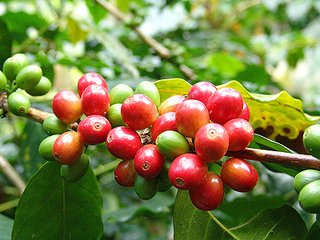
Coffee cultivation and cultivation Coffee cultivation techniques and techniques Introduction to the process of coffee green beans cultivation
(a) seedling propagation coffee seedling propagation can be divided into seed propagation and asexual propagation. 1. Seed propagation (1) Seed collection, seed washing and seed storage In the mature period of coffee (the mature period of medium seed coffee in Hainan Island is 2~3 months, and the mature period of small seed coffee is 9~11 months), fully mature fruits are picked from healthy and high-yield mother trees to make seeds. After the fruits are picked, peeling and seed washing are carried out immediately.

Kenya AA coffee is the top of the class? Embu region? Engway processing plant? NCE bidding batch?
Country: Kenya Origin: Embu County Producer: Ngerwe Factory Altitude: 1,600 m Variety: SL28 SL34 Treatment: Fully washed Roast: Light Roasted Flavor: With plum and grapefruit flavors, bright acidity, well balanced, smooth and delicate taste. Ngerwe treatment plant is located in Ken

Yunnan Coffee planting area Yunnan Coffee planting Yunnan Coffee Coffee
The term "fine coffee" was first put forward by Ms. Knudsen of the United States in Coffee and Tea magazine. At that time, Ms. Knudsen, as a coffee buyer at B.C. Ireland in San Francisco, was very dissatisfied with the neglect of the quality of raw coffee in the industry, and even some big roasters mixed a large amount of Robesda beans in the comprehensive beans, so she put forward the concept of boutique coffee.
A hybrid between Arabica and Robusta [Catimor] Katimo and its branches
The exchange of professional baristas please pay attention to the coffee workshop (Wechat official account cafe_style) the interspecific hybrid between Arabica and Robusta [Catimor] the hybrid between Katimo Caturra and Timor. It was discovered in Portugal in 1959. The palate is obvious and easy to distinguish, the bitter acid is a little astringent, the aftertaste is often salty, and there is low acidity in Robusta in the Timo family.

Guma Village / Guma treatment Plant, Qilin Yaga Town, Kenya, TOP AB grade water washed bean flavor and mouth
Professional coffee knowledge exchange more coffee bean information please follow the coffee workshop (Wechat official account cafe_style) Kilin Yajia Town, Kenya Guma Village / Guma processing Plant TOP AB grade waterwashed bean flavor and taste characteristics? September 2017 Coffee Review 95 batches our factory PB batches, November 2016 coffee review 97 points, 2016 coffee revie

Home Tuani processing Plant in Neri, Kenya the best coffee in Kenya is produced by Kenya AA.
Professional coffee knowledge exchange more coffee bean information please follow the coffee workshop (Wechat official account cafe_style) Kenya Neri production area Jia Tuani processing plant country: Kenya production area: Neri producer: nearby small farmers treatment plant: Jia Tuani treatment plant treatment method: Kenyan washing treatment varieties: SL28, SL34, altitude: 1400 1800
Green coffee cups that can be planted
Abstract: drink a cup of coffee plant a tree can grow a coffee cup Plantable Coffee Cup from the outside, this is an ordinary paper coffee cup is not much different from other paper cups, but on closer inspection, there are many irregular protrusions on its surface, not to prevent slippage, but to put seeds into living plants. Drink a cup of coffee and plant coffee that can be planted by a tree
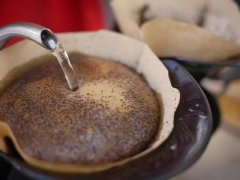
A brief introduction to Coffee planting History and planting techniques
According to historical records, coffee trees were first planted in Taiwan in 1884, and coffee cultivation in mainland China began in Yunnan. In 1902, a French missionary named Tian introduced seeds from Yinggong County in Binchuan County, Yunnan Province. it was successfully planted in a place called Zhu Kula, which is located on the bank of the Yushan River, a tributary of the Jinsha River. The commercial cultivation of coffee in Yunnan began in 1985, but its development is slow.

Description of flavour and aroma of Golden Tara Pearl Red Honey Coffee from Tarazhu Ecological treatment Plant in Costa Rica
For the exchange of professional baristas, please follow the coffee workshop (Wechat official account cafe_style) Product name: Costa Rica Tarazhu Ecological processing Plant Gold Tarazhu Red Honey (Costa Rica Tarrazu Bio Caf Oro-Tarrazu Red Honey) Flavor description: candied fruits and dried fruit, lemon, sweet and sour bright taste thick and solid producing area: Tarazhu producing area (Tarraz)

Introduction to the characteristics of Katim Coffee varieties treated by Flavor and Taste Grinding degree in Yunnan Province, China
Katim coffee bean is a variety with high and stable yield. The results of trial planting in different ecological areas show that as long as it is planted in accordance with high-yield cultivation techniques, a higher yield will be obtained, with an average yield of more than 150 kg per mu and a small area of more than 400 kg. 1. The state-run Lujiang Farm in Baoshan City planted 12.6 mu in March 1991. The land has no shade and is irrigated once in the dry season.

A brief introduction to the cultivation of slightly fruity tin tin card boutique coffee beans, geographical location, climate and altitude
Yunnan coffee was planted on a large scale in the mid-1950s, with a planting scale of 4000 hectares at one time. By the end of 1997, the planting area of coffee in the province had reached 7800 hectares. At present, the planting area of the province accounts for 70% of the national area, and the output accounts for 83% of the whole country. Yunnan coffee has established the dominant position in China in terms of planting area and coffee bean production. Yunnan coffee should be distinguished by planting.

The planting technique of Coffee
Coffee planting technology 1, growth habits coffee likes warmth, drought and cold tolerance, afraid of frost damage, seedlings and adult plants are easily defoliated to death by frost, seeds can not mature. Coffee is not strict on the land, idle land can also be planted, but with good drainage, deep soil, loose and fertile sandy soil is appropriate. Second, seed selection of planting techniques: before sowing, the germination rate of seeds should be tested. Concrete method